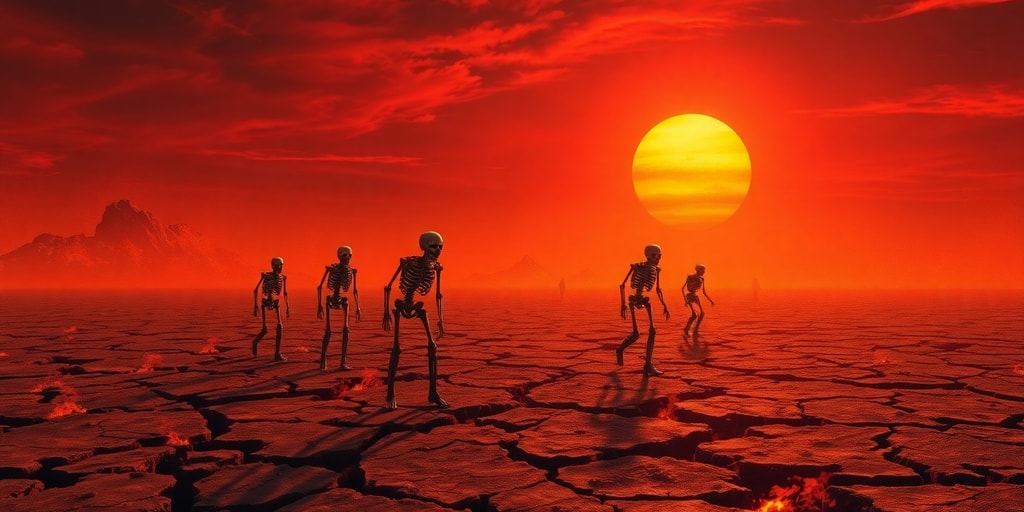
THE SUN IS COOKING AMERICA: GRAND CANYON DEATHS ARE JUST A WHISPER OF THE COMING APOCALYPSE
Another scorching summer, another grim reminder from the Grand Canyon that the forces of nature, amplified by our own hubris, are far beyond our control. Three souls lost to the inferno, not in some distant war zone or a chaotic foreign land, but within our own borders, a stark and brutal testament to the unfolding environmental collapse that is no longer a distant threat, but a searing reality. For the average American, already struggling under the weight of inflation, geopolitical instability, and a crumbling infrastructure, this isn’t just a tragic news story about ill-prepared tourists. It’s a flashing red siren, a preview of the systemic breakdown that awaits us. The heat isn’t just a nuisance; it’s a catalyst, a force that will exacerbate every existing vulnerability in our fragile society, from our creaking power grids to our increasingly precarious food supply chains. When the very air becomes a weapon, and the ground beneath our feet radiates an unbearable heat, the illusion of stability we cling to begins to evaporate like dew in the desert sun.
This isn’t about a few unlucky hikers; it’s about the systemic risks that are now unavoidable. Our reliance on an aging and increasingly stressed energy infrastructure means that when the mercury soars, the lights go out. Brownouts and blackouts, once minor inconveniences, will become prolonged periods of misery and disruption, impacting everything from refrigeration to communication. Imagine the economic fallout: businesses shuttered, supply chains frozen, essential services crippled. The cost of cooling our homes will become astronomical, a luxury few can afford, further widening the chasm between the haves and the have-nots. This is the slow-motion collapse of our modern conveniences, a dismantling of the systems that we have taken for granted, all under the relentless gaze of an overheated planet. The Grand Canyon, a symbol of enduring natural beauty, is becoming a monument to our collective failure to heed the warnings, a harbinger of the widespread suffering that extreme weather will inflict on an unprepared populace.
The economic consequences are not abstract theories debated in think tanks; they are tangible losses that will directly impact your wallet and your livelihood. Beyond the immediate costs of disaster relief and rebuilding after increasingly frequent and severe weather events, consider the long-term degradation of vital resources. Arable land will shrink, water scarcity will intensify, and the cost of basic necessities like food and water will skyrocket. The agricultural heartland, already facing challenges, will be pushed to its breaking point. This will translate into higher grocery bills, fewer options, and the very real possibility of shortages. Our globalized economy, so adept at delivering cheap goods in good times, is a house of cards when faced with widespread climate disruption. The interconnectedness that once seemed like a strength will become a crippling weakness, as localized disasters ripple outwards, creating a domino effect of economic instability that will leave ordinary Americans struggling to make ends meet.
And then there’s the grim, long-term outlook. These extreme heat events, now a regular occurrence, are not isolated incidents. They are symptoms of a planet fundamentally out of balance, a trajectory that points towards a future of escalating crises. The comfortable predictability of our past is a relic. The future promises more heat, more storms, more droughts, and more widespread social unrest as resources dwindle and desperation grows. The Grand Canyon is just one small corner of a vast and complex system, but its suffering is a microcosm of the larger breakdown. For the average American, this means a future of constant adaptation, of living with scarcity, and of facing existential threats that will redefine what it means to be secure. The dream of prosperity and stability is fading, replaced by the stark reality of survival in a world that is actively hostile to our continued existence.
Frequently Asked Questions
Will extreme heat cause widespread power outages in my area?
Yes, increased demand for cooling during extreme heat events puts immense strain on aging power grids, making widespread outages more likely. These disruptions can cripple essential services and lead to significant economic losses.
How will climate change affect the cost of groceries?
Climate change is expected to significantly impact food production through extreme weather, water scarcity, and reduced arable land. This will inevitably lead to higher prices and potential shortages for staple foods.
Is the Grand Canyon heat event a sign of long-term climate collapse?
While not a sole indicator, the increasing frequency and intensity of extreme heat events like the one at the Grand Canyon are consistent with projections of long-term climate instability. This signals a future of escalating environmental crises and societal challenges.
Based on reporting from: apnews.com

Marcus Hale is a geopolitical risk analyst and investigative journalist with over a decade of experience covering economic instability, foreign policy, and systemic risk. A former consultant to financial institutions and government think tanks, Marcus has spent his career stress-testing optimistic narratives and finding the structural cracks underneath. He founded TheWorstView.today because he believes that the most patriotic thing an American can do is refuse to be comforted by convenient lies.
Drowning in despair?
It’s not all hellfire and brimstone. See the naively optimistic (but much happier) version of this story on The Best View.
Check the Bright Side →