🎧 Listen to the audio version by Marcus
HAWAII DISASTER IS JUST THE FIRST WAVE: AMERICA’S INFRASTRUCTURE IS DROWNING IN DEBT AND DECAY
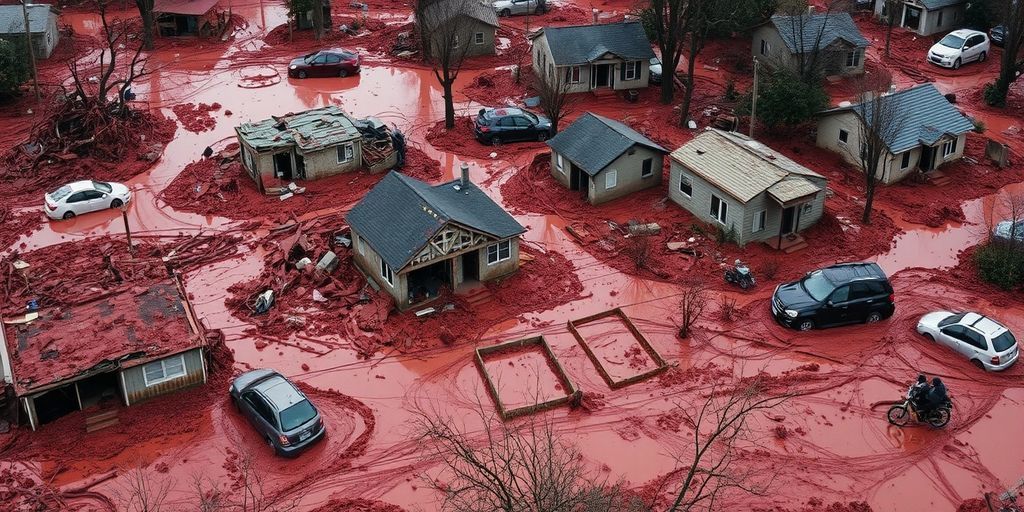
Don’t let the idyllic images of Hawaii fool you. While the mainstream media fawns over the “natural disaster,” what we’re witnessing is a stark, brutal preview of America’s inevitable decline. This isn’t just about floods washing away homes and cars; it’s about the systemic rot that has been festering for decades, now bursting through the surface with the force of a mudslide. The reddish volcanic mud coating those Hawaiian streets? It’s a metaphor for the economic and infrastructural decay that’s burying us all. For the average American, this means more than just inconvenience. It signifies a future where the very foundations of our society – our roads, our bridges, our power grids, our water systems – are as vulnerable as those Hawaiian houses. We’ve mortgaged our future for short-term gains and political expediency, and the bill is finally coming due. Expect more of this, not less. This isn’t a blip; it’s the new normal, a steady drip, drip, drip of escalating crises that will chip away at your savings, your security, and your peace of mind.
The sheer scale of destruction in Hawaii, amplified by a predictable governmental response that will inevitably be slow, inefficient, and riddled with bureaucratic hurdles, highlights a critical vulnerability: our aging and underfunded infrastructure. We’ve spent trillions on overseas adventures and corporate bailouts, while the very arteries of our nation have been allowed to crumble. When a single, albeit severe, weather event can devastate an entire island chain, what happens when multiple regions face simultaneous challenges? The answer is simple: cascading failure. Imagine widespread power outages, not just for a few hours, but for weeks. Imagine supply chains snapping under the strain, leaving shelves bare and prices soaring. This isn’t hyperbole; it’s the logical extrapolation of our current trajectory. The economic consequences for the average American will be severe. Property values in vulnerable areas will plummet, insurance premiums will become astronomical, and the cost of rebuilding will fall, in large part, on the taxpayer – that’s you. Your taxes will go up, your ability to build wealth will diminish, and your dreams of a secure retirement will become increasingly distant fantasies.
Furthermore, this Hawaiian catastrophe underscores our woeful lack of preparedness for the escalating realities of climate change, a topic conveniently skirted by our political elites. While they debate abstract policies and engage in performative activism, the ground beneath us is literally shifting. The increased frequency and intensity of extreme weather events are not abstract scientific predictions; they are tangible, destructive forces that are already impacting our lives. And our response? Patchwork solutions and platitudes. The money spent on disaster relief is merely a bandage on a gaping wound, a temporary fix that distracts from the fundamental problem: our inability to adapt and build resilient systems. This means that every storm, every flood, every wildfire will be amplified, causing greater destruction and imposing heavier costs. For the average American, this translates to a constant state of anxiety, a gnawing uncertainty about the future. It means the possibility of displacement, the loss of livelihoods, and the erosion of community stability. We are not just facing economic hardship; we are facing a slow-motion unraveling of the fabric of American life.
The long-term implications are even more chilling. This isn’t just about the immediate aftermath of a flood. It’s about a fundamental breakdown of the systems that have underpinned our prosperity and security. When our infrastructure fails, when our economy falters under the weight of constant crises, and when our government proves incapable of effective response, the foundations of social order begin to weaken. We are heading towards a future of increased scarcity, heightened social tensions, and a diminished capacity to address collective challenges. The optimism that once defined America is being replaced by a grim pragmatism, a realization that the era of easy progress is over. The average American will be forced to contend with a reality where their hard-earned savings are devalued, their opportunities are curtailed, and their personal safety is increasingly precarious. The question is not *if* these systemic risks will manifest in devastating ways, but *when*, and how much worse they will be because we refused to face them head-on.
Frequently Asked Questions
Will my homeowner’s insurance cover flood damage like in Hawaii?
Standard homeowner’s insurance typically does not cover flood damage; you usually need a separate flood insurance policy. Given the increasing frequency of such events, this is an added cost many Americans are ill-prepared for.
How will these infrastructure failures affect my job and income?
Widespread infrastructure failures disrupt supply chains, increase the cost of goods and services, and can lead to business closures, all of which directly impact employment opportunities and your earning potential.
Is the US government equipped to handle more disasters like this?
The slow and often inadequate response to previous major disasters suggests the US government’s capacity is strained, meaning future recovery efforts for average Americans will likely be more protracted and less effective.

Based on reporting from: apnews.com

Marcus Hale is a geopolitical risk analyst and investigative journalist with over a decade of experience covering economic instability, foreign policy, and systemic risk. A former consultant to financial institutions and government think tanks, Marcus has spent his career stress-testing optimistic narratives and finding the structural cracks underneath. He founded TheWorstView.today because he believes that the most patriotic thing an American can do is refuse to be comforted by convenient lies.
Drowning in despair?
It’s not all hellfire and brimstone. See the naively optimistic (but much happier) version of this story on The Best View.
Check the Bright Side →