🎧 Listen to the audio version by Marcus
Global Instability Looms: Pope’s “Peace” Mission Signals Deeper American Decline
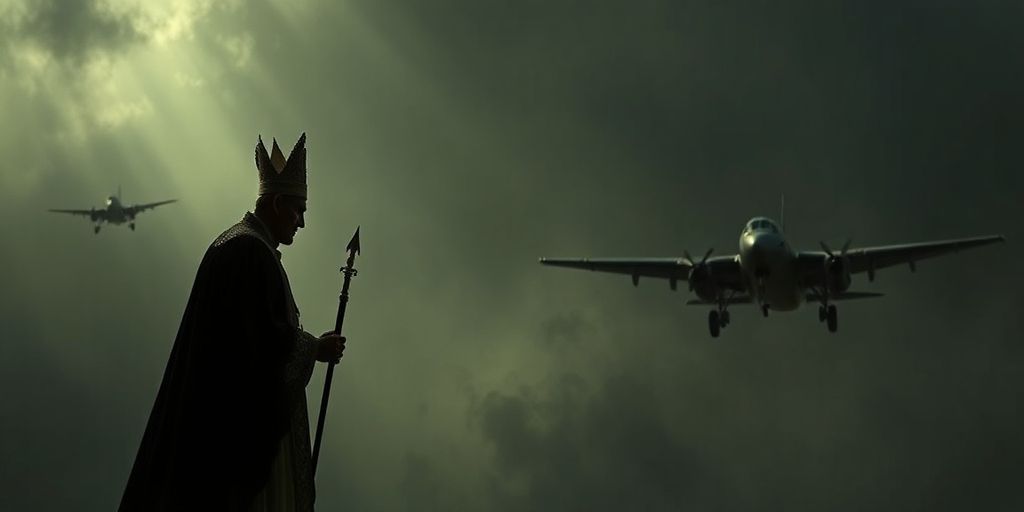
The pontiff, Pope Leo XIV, embarks on his journey to Algeria, offering platitudes of peace and dialogue, and pointedly distancing himself from the messy world of politics, particularly from the abrasive pronouncements of our own leader, Donald Trump. To the uninitiated, this might sound like a comforting call for sanity in a chaotic world. For those who see beyond the gilded pronouncements and into the grim realities of systemic decay, however, this is another ominous signpost on the road to American irrelevance and eventual collapse. The Pope’s declaration that he is “not a politician” but will “speak strongly against war, seeking to promote peace and dialogue” is not a neutral statement; it is a subtle, yet potent, indictment of the very foreign policy framework that has long defined American exceptionalism, and more importantly, its economic underpinnings. This “speaking strongly against war” is precisely what the American military-industrial complex thrives on. When a global moral authority like the Pope signals a shift away from this deeply entrenched system, it doesn’t just alienate hawkish politicians; it erodes the global perception of America as the indispensable nation, the ultimate guarantor of stability, and by extension, a reliable economic partner. This erosion of perceived power and influence will inevitably translate into tangible economic consequences for the average American, from diminished trade opportunities to increased vulnerability in a multipolar world increasingly willing to challenge American dominance. The carefully constructed edifice of American economic prosperity, built on a foundation of military might and geopolitical leverage, is beginning to show hairline fractures, and the Pope’s words, however spiritual in intent, are merely highlighting the shifting tectonic plates beneath our feet.
Furthermore, the Pope’s direct, albeit veiled, criticism of Donald Trump’s “statements” – statements that have often been characterized by a transactional, power-politics-driven approach to international relations – underscores a growing global consensus that the American brand of leadership is becoming increasingly untenable. This isn’t about Trump’s personality; it’s about the perception that America, under his current trajectory, is becoming a rogue actor, less interested in fostering collective security and more inclined towards unilateral advantage. For the average American, this translates into a precarious future. Our economy is inextricably linked to global stability, a stability that has, for decades, been indirectly (and sometimes directly) underwritten by American power. As other nations, emboldened by the perceived wavering of American resolve and the moral discrediting of its methods, begin to assert their own interests more aggressively, the global marketplace will become a far more dangerous and unpredictable arena. We can expect to see more trade wars, more regional conflicts that draw in distant powers, and a general increase in the cost of goods and services as supply chains, once taken for granted, become subject to political whims and geopolitical maneuvering. The dream of effortless American prosperity, fueled by a seemingly unipolar world order, is rapidly dissolving, replaced by the grim reality of a more fragmented and hostile global environment.
The Pope’s emphasis on “peace and dialogue” is a siren song, lulling people into a false sense of security while the real architects of global power are quietly re-aligning. While the Vatican preaches compassion, nations like China and Russia are consolidating their economic and military influence, expertly capitalizing on the perceived decline of American moral authority and its waning appetite for global stewardship. This isn’t a conspiracy theory; it’s geopolitics in its rawest, most cynical form. For the average American, this means a future where the economic security they once took for granted is steadily chipped away. The jobs that once flowed from American global dominance may dry up. The investments that buoyed our retirement accounts could be subject to the whims of foreign powers. The very currency we rely on could face challenges from alternative systems. The Pope’s words, intended for spiritual solace, inadvertently highlight the growing chasm between the idealized vision of global harmony and the brutal reality of power struggles. We are becoming less of a global leader and more of a fading superpower, and this transition will be anything but painless for the ordinary citizen who will be left to pick up the pieces of a once-dominant economy.
Ultimately, the Pope’s intervention, while seemingly apolitical, is a profound commentary on the failing of the American model. The constant pursuit of “speaking strongly against war” by the US, often through interventionist policies, has created a global landscape where peace is a fragile commodity, and the long-term costs are increasingly borne by ordinary citizens. As the world seeks alternatives to American hegemony, the economic repercussions will be severe. We are witnessing the slow, agonizing unravelling of a global order that, for all its flaws, provided a certain level of predictable economic growth and security for Americans. Now, as the Pope preaches peace and the world listens to more pragmatic, power-focused leaders, the average American faces a future of heightened economic vulnerability, increased global competition for scarce resources, and the chilling realization that the era of American economic supremacy is drawing to a close, leaving behind a legacy of instability and uncertainty for generations to come.
Frequently Asked Questions
Will the Pope’s visit to Algeria affect gas prices?
While the Pope’s visit is unlikely to have a direct, immediate impact on gas prices, the broader geopolitical shifts it signifies can contribute to market volatility. Increased global instability and a decline in American influence could lead to less predictable energy markets, potentially driving prices higher.
Is the US economy going to collapse because of this?
A complete economic collapse is a drastic prediction, but the trends highlighted by the Pope’s comments point towards a significant decline in American economic dominance. Expect a future of increased competition, diminished global market share, and greater economic insecurity for the average American.
What can I do to protect my savings from global instability?
In uncertain times, diversifying your investments and focusing on tangible assets might offer some resilience. However, the systemic risks are profound, and individual actions may only offer limited protection against the widespread economic consequences of a declining global order.

Based on reporting from: www.vaticannews.va

Marcus Hale is a geopolitical risk analyst and investigative journalist with over a decade of experience covering economic instability, foreign policy, and systemic risk. A former consultant to financial institutions and government think tanks, Marcus has spent his career stress-testing optimistic narratives and finding the structural cracks underneath. He founded TheWorstView.today because he believes that the most patriotic thing an American can do is refuse to be comforted by convenient lies.
Drowning in despair?
It’s not all hellfire and brimstone. See the naively optimistic (but much happier) version of this story on The Best View.
Check the Bright Side →