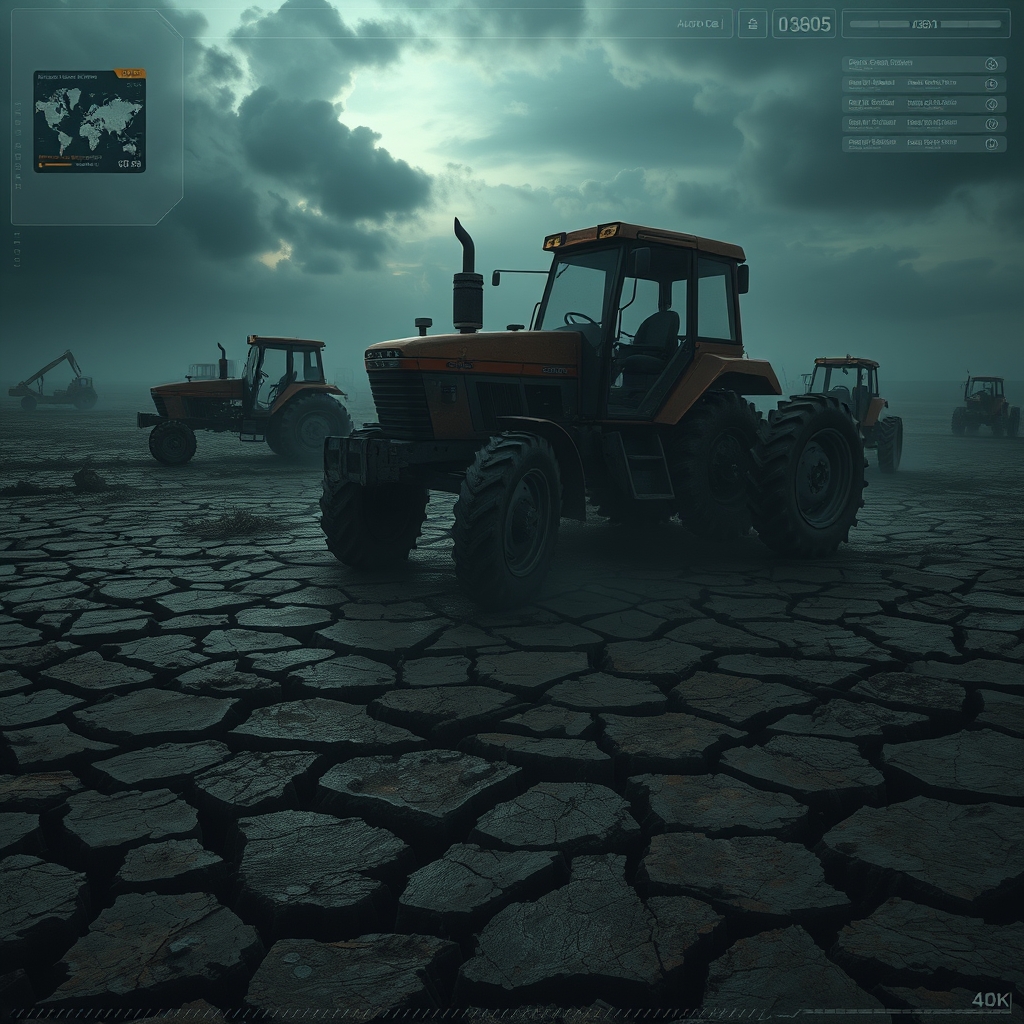
Diesel Disaster: Washington’s Pathetic Bailout Signals Looming Collapse for American Plate
Another day, another grotesque display of Washington’s utter incompetence. President Trump, bless his bombastic heart, has ridden in on his gilded horse to “save” the American farmer with a paltry $8 billion bailout. This isn’t a rescue; it’s a death rattle, a desperate, last-gasp attempt to plaster over the cracks of a system already groaning under the weight of its own contradictions. For the average American, this isn’t good news. It’s a flashing neon sign pointing towards a future where your dinner plate is increasingly empty, your wallet is thinner, and the very notion of self-sufficiency crumbles into dust.
Let’s be clear: this $8 billion is not a solution. It’s a band-aid applied to a gaping wound, a transparent attempt to buy votes and placate a crucial demographic while the underlying rot continues to fester. The soaring diesel costs that are crippling our farmers are not some random act of nature. They are the direct consequence of decades of reckless energy policies, a fetishization of “green” idealism divorced from economic reality, and a global scramble for resources that Washington has consistently exacerbated through its meddling. We have systematically dismantled our own energy independence, become beholden to volatile international markets, and now we’re paying the price, not just at the pump for our own vehicles, but in the escalating cost of every single thing that reaches your table. This bailout only papers over the immediate pain, but it does nothing to address the systemic vulnerabilities that will continue to plague us.
What does this mean for you, the consumer? It means higher prices. It means less choice. It means a further erosion of your purchasing power. Farmers, already operating on razor-thin margins, will simply pass these inflated costs onto you. But it’s more than just a few extra dollars at the grocery store. This crisis reveals the fragility of our entire food supply chain. When the bedrock of our agricultural production is threatened by the cost of basic inputs like fuel, the entire edifice is in danger of collapse. Imagine a future where certain staples become luxury items, where fresh produce is a distant memory for many, and where our reliance on foreign imports – subject to the whims of geopolitical instability – becomes an unavoidable reality. This isn’t hyperbole; it’s the logical, grim trajectory of our current path.
This bailout is also a testament to the deeply flawed economic philosophy that governs Washington. Instead of fostering a resilient, self-sustaining agricultural sector, we’ve created a system dependent on perpetual government intervention. This cycle of boom and bust, followed by handouts, stifles innovation and discourages genuine efficiency. It breeds complacency and entrenches the very problems it purports to solve. The $8 billion will likely be absorbed by a handful of large agricultural conglomerates, leaving the smaller family farms, the true backbone of rural America, still struggling. And what happens when the next crisis hits? Another bailout? More debt? This unsustainable model is a recipe for long-term economic stagnation and a dwindling capacity for genuine national prosperity. We are mortgaging our future for short-term political expediency, and the average American will be left to pick up the increasingly heavy tab.
Frequently Asked Questions
Will this bailout actually help farmers in the long run?
This is a short-term fix, not a sustainable solution. It may offer temporary relief but does little to address the root causes of rising fuel costs or the systemic vulnerabilities in our agricultural sector.
How will soaring diesel costs affect my grocery bill?
Expect significant price increases on nearly all food items. Farmers will pass on these higher operational costs, leading to inflation that erodes your purchasing power.
Is our food supply chain at risk because of this?
Yes, the crisis highlights the fragility of our food system. Dependence on expensive fuel makes it vulnerable to disruptions, potentially leading to shortages and reduced availability of certain products.
Based on reporting from: finance.yahoo.com

Marcus Hale is a geopolitical risk analyst and investigative journalist with over a decade of experience covering economic instability, foreign policy, and systemic risk. A former consultant to financial institutions and government think tanks, Marcus has spent his career stress-testing optimistic narratives and finding the structural cracks underneath. He founded TheWorstView.today because he believes that the most patriotic thing an American can do is refuse to be comforted by convenient lies.
Drowning in despair?
It’s not all hellfire and brimstone. See the naively optimistic (but much happier) version of this story on The Best View.
Check the Bright Side →