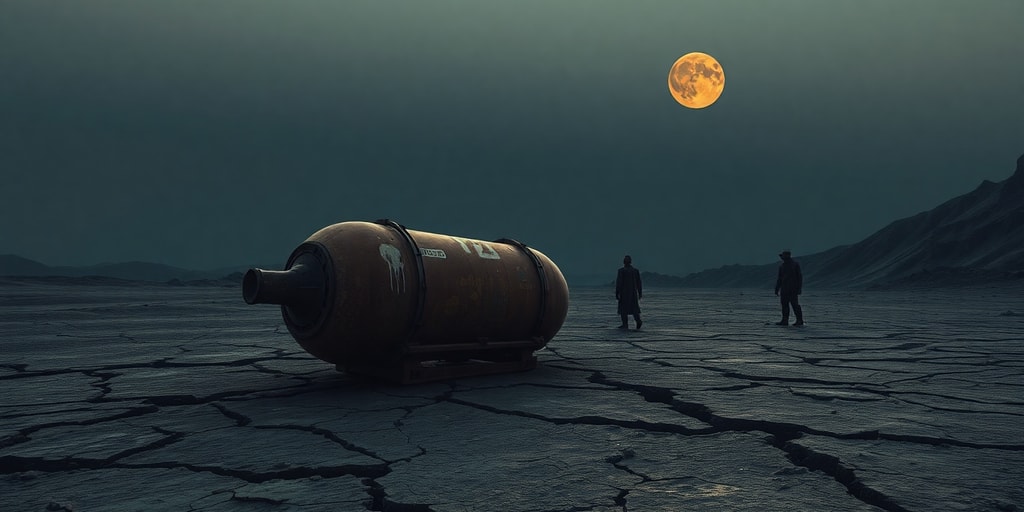
Artemis III: A Cosmic Diversion While America Crumbles Below
The latest whispers from the labyrinthine corridors of aerospace, gleaned from the hushed tones of industry insiders, reveal the latest minutiae of the Artemis III mission – our grand, expensive jaunt back to the Moon. While you’re struggling to keep the lights on and the grocery cart full, the titans of industry and government are busy sketching out blueprints for lunar dust. This isn’t just a minor detail; it’s a flashing neon sign screaming our priorities are fundamentally broken. We’re pouring billions, resources that could be patching our crumbling infrastructure, revitalizing our forgotten towns, or even, dare I say, providing basic healthcare, into a vanity project on a dead rock. The average American, the one footing the bill through taxes and silently enduring the slow decay of their own nation, is being sold a fairy tale. This lunar escapade is a high-tech opiate, a distraction designed to make us feel like we’re still at the forefront of something, anything, while the very foundations of our society are eroding beneath our feet. The long-term consequences are stark: a nation increasingly unable to care for its own citizens, left behind by every other significant global player, all while gazing at the stars and pretending the real problems aren’t right here on Earth.
Let’s be brutally honest: this Artemis III endeavor is a symptom of a deeper malaise, a systemic failure to address the tangible needs of the populace. While engineers debate lunar lander configurations and the ethics of resource extraction on a celestial body devoid of life, our own planet festers. Our roads are potholed, our bridges are antiquated, and our water systems are a ticking time bomb. The economic consequences are not abstract; they are felt directly in your wallet. Every dollar siphoned into these astronomically expensive space programs is a dollar not invested in education, in sustainable energy solutions, or in the very industries that could lift communities out of poverty. We are perpetuating a cycle of neglect, prioritizing distant dreams over immediate necessities. This isn’t about national pride; it’s about a profound misallocation of finite resources, a testament to the power of special interests and a government more concerned with its legacy than its people’s well-being. The long march toward societal collapse is accelerated when a nation chooses to invest in the extraordinary rather than the essential.
The cynic in me sees this not as progress, but as a desperate grasp for relevance in a world that is rapidly outgrowing our outdated paradigms. While we’re focused on planting flags on the Moon, other nations are building the future – smart cities, advanced AI, and robust domestic economies. Artemis III, with its exorbitant price tag and nebulous return on investment for the everyday citizen, is a colossal waste of intellectual capital and financial might. This isn’t a bug; it’s a feature of a system designed to benefit the few at the expense of the many. The systemic risk here is the further disenfranchisement of the American people, the growing chasm between the haves and have-nots, and the eventual irrelevance of a nation that can no longer afford to maintain its own house, let alone venture into the cosmos. This obsession with lunar exploration is a dangerous form of escapism, a denial of the harsh realities of economic decline and social fragmentation that are already upon us.
Consider the sheer arrogance of it all. We face existential threats here on Earth – climate change, resource depletion, political instability – and yet, our leaders and the corporations that dictate their agendas are fixated on escaping to another world. This isn’t about survival; it’s about a misguided belief that we can outrun our problems. The economic implications are dire. The more we invest in these showy, taxpayer-funded spectacles, the less we have for critical domestic issues. This leads to a stagnant economy, increased inequality, and a general sense of despair among the populace. The long-term consequence is a nation that is not only economically weakened but spiritually hollowed out, its citizens alienated and its future precarious, all because we chose to chase lunar dust instead of building a sustainable and equitable society at home.
Frequently Asked Questions
Will Artemis III actually benefit me, the average American?
The direct benefits for the average American are virtually nonexistent, beyond the intangible feeling of national pride. The vast sums of money spent could be addressing pressing domestic issues like infrastructure, healthcare, and education, which would have a far more tangible positive impact on your daily life.
Is the cost of Artemis III worth the potential scientific discoveries?
The scientific discoveries promised are often framed with grandiosity, but the immediate return on investment for the average citizen is questionable. These missions represent a significant drain on resources that could be used for scientific research and development on Earth, addressing more immediate and impactful global challenges.
Are there real risks of America falling behind other countries because of these space missions?
Yes, there are significant risks. While we’re investing in lunar endeavors, other nations are prioritizing advancements in crucial technologies and economic development that will shape the global landscape. This could leave America economically and technologically marginalized in the long run, unable to compete or effectively address its own internal problems.
Based on reporting from: arstechnica.com

Marcus Hale is a geopolitical risk analyst and investigative journalist with over a decade of experience covering economic instability, foreign policy, and systemic risk. A former consultant to financial institutions and government think tanks, Marcus has spent his career stress-testing optimistic narratives and finding the structural cracks underneath. He founded TheWorstView.today because he believes that the most patriotic thing an American can do is refuse to be comforted by convenient lies.
Drowning in despair?
It’s not all hellfire and brimstone. See the naively optimistic (but much happier) version of this story on The Best View.
Check the Bright Side →