🎧 Listen to the audio version by Marcus
OCEAN MONSTERS WASH ASHORE: Denmark’s Whale Tragedy is a Portent of America’s Impending Doom!
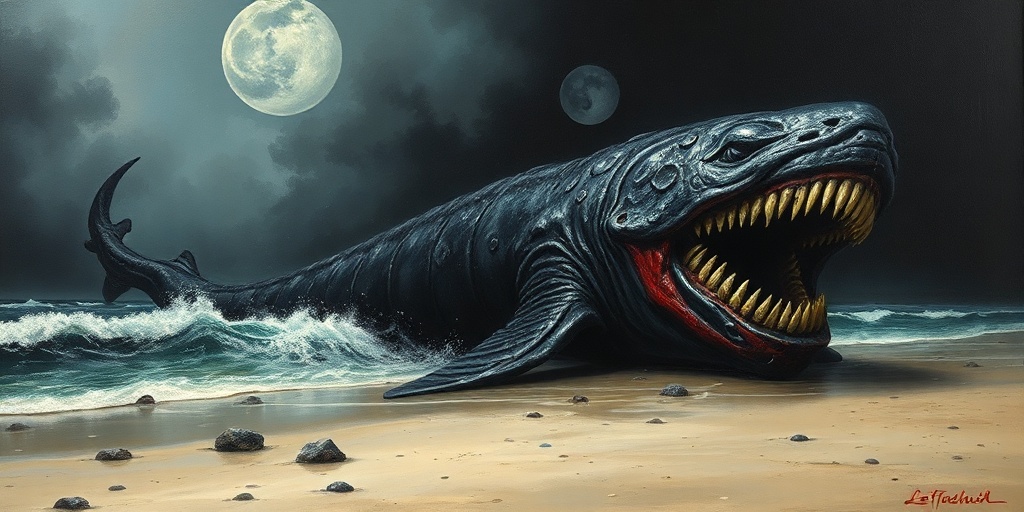
Forget your carefully curated Instagram feeds and your artisanal sourdough. The news out of Denmark, about a beached and bloated humpback whale named “Timmy,” isn’t just a quirky animal story; it’s a chilling harbinger of the systemic rot that’s already consuming the American way of life. This isn’t about a whale, dear reader. This is about a world breaking down, a global ecosystem in collapse, and the utterly predictable consequences that will soon be lapping at your own doorstep, much like Timmy’s decomposing carcass on that Danish beach. The “controversial failed rescue effort” is a metaphor, you see. It’s a perfect, pathetic microcosm of our own futile attempts to patch up a world we’ve fundamentally broken. We pour resources, throw good intentions into the abyss, and what do we get? More decay. More stench. More evidence of our profound, terminal incompetence. This whale, this magnificent creature, reduced to a floating testament to our collective failure, is a warning shot fired across the bow of American prosperity. Don’t expect your government, already drowning in debt and division, to learn anything from this. They’re too busy squabbling over who gets to preside over the wreckage.
The economic implications for the average American are as grim as the smell of whale decomposition. This isn’t just a Danish problem; it’s a global indicator. The oceans are the planet’s lifeblood, and they are sick. Dying whales, toxic waters, collapsing fisheries – these are not abstract environmental concerns. They translate directly into skyrocketing food prices. That sustainable, ethically-sourced seafood you pay a premium for? It will soon be a luxury only the ultra-rich can afford, if it exists at all. For the rest of us, it will be a return to processed, nutrient-void rations, another step down the ladder of a declining American standard of living. Our supply chains, already stretched thinner than a politician’s promise, are incredibly vulnerable to disruptions caused by environmental catastrophes. Think about it: if marine ecosystems are failing, what does that mean for international trade? For the shipping that brings your electronics, your clothes, your medicine? It means more delays, more shortages, and ultimately, more inflation that gnaws away at your already dwindling purchasing power. The politicians will blame it on “global supply chain issues” or some other convenient scapegoat, but the truth is far more fundamental: we are living on a planet that is actively pushing back against our insatiable, unsustainable demands.
This isn’t a temporary blip; it’s the slow-motion train wreck of long-term collapse. The death of Timmy is just one more data point in a mountain of evidence suggesting that the systems we rely on – economic, environmental, social – are fundamentally unstable. We’ve operated under the delusion of perpetual growth and endless resources, a dangerous fantasy that is now colliding headfirst with reality. The decline of ocean health is intrinsically linked to the decline of global stability. Resource scarcity breeds conflict. Environmental refugees will become a tidal wave, overwhelming borders and straining social services already buckling under the weight of domestic dysfunction. For the average American, this means less security, more anxiety, and a gnawing sense of dread about the future. The idea of a comfortable retirement, of passing on a better world to your children, is becoming a quaint relic of a bygone era. The collapse isn’t coming; it’s already here, manifesting in subtle, insidious ways. The dead whale is just a more visceral, more pungent reminder of the rot beneath the surface, a rot that will eventually consume us all if we continue on this suicidal path.
Frequently Asked Questions
Will this whale death affect my grocery bill?
Absolutely. The health of marine ecosystems is directly tied to global food security. Expect further increases in seafood prices and potential shortages as fisheries struggle to cope with environmental degradation.
Is my retirement savings safe with all this global chaos?
The systemic risks posed by environmental collapse and geopolitical instability create significant volatility in financial markets. Long-term security of savings is increasingly uncertain as traditional economic models falter.
What can I do about the planet collapsing?
Realistically, individual actions have limited impact against systemic forces. Focus on securing your immediate needs and preparing for increased societal disruption, as large-scale governmental or global solutions appear increasingly unlikely.

Based on reporting from: www.npr.org

Marcus Hale is a geopolitical risk analyst and investigative journalist with over a decade of experience covering economic instability, foreign policy, and systemic risk. A former consultant to financial institutions and government think tanks, Marcus has spent his career stress-testing optimistic narratives and finding the structural cracks underneath. He founded TheWorstView.today because he believes that the most patriotic thing an American can do is refuse to be comforted by convenient lies.
Drowning in despair?
It’s not all hellfire and brimstone. See the naively optimistic (but much happier) version of this story on The Best View.
Check the Bright Side →