OUR PRESIDENT FLIES HOME ON A RUST BUCKET AMIDST GLOBAL FIRE: A PORTENT OF AMERICAN COLLAPSE
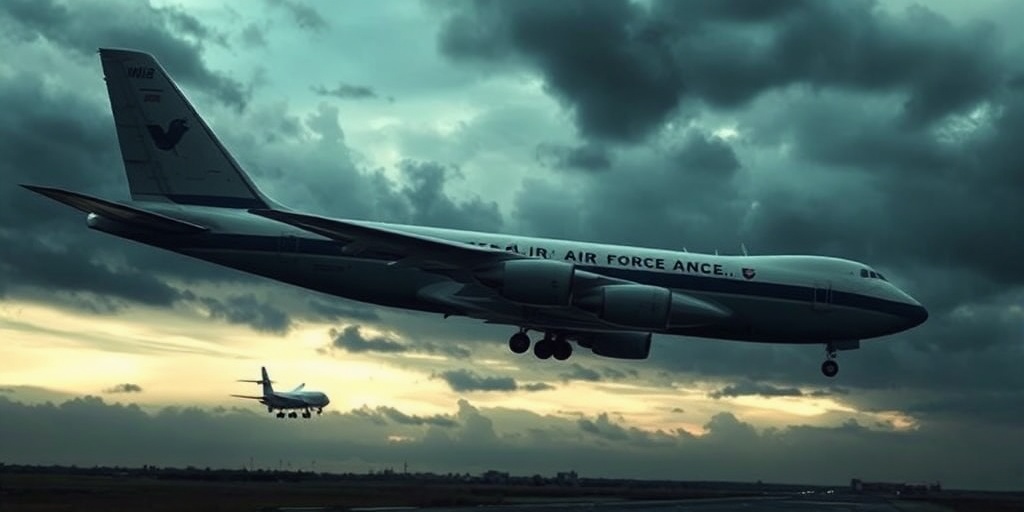
While the chattering classes marvel at the supposed “optics” and “symbolism” of President Trump’s choice of aircraft, let us cut through the comforting illusions. The stark reality is that our commander-in-chief, the steward of our dwindling global influence, is being ferried back to the homeland on a relic. This isn’t a minor inconvenience; it’s a chilling metaphor for the rot that has set in at the very core of American power. The fact that a replacement plane, seemingly a gilded bribe from a nation whose own stability is a fantasy, was even considered speaks volumes about our nation’s dwindling strategic self-reliance. We are no longer the architects of our own destiny, but beggars for favors, trading our principles for fleeting comfort. This isn’t about presidential preference; it’s about a nation increasingly reliant on hand-me-downs and foreign largesse, a sure sign of systemic decay that will inevitably trickle down to the pockets and futures of every hardworking American.
Let’s be brutally honest: the news that the President is flying on an older Air Force One, while Iran and the U.S. engage in escalating hostilities, is not merely an anecdote of presidential travel plans. It is a symptom of a nation adrift, a ship with its rudder broken, buffeted by storms it can no longer control. While our leaders fiddle with presidential transport, the global order, the very framework that has allowed America to project power and secure its economic interests, is dissolving. The “trading strikes” with Iran are not isolated incidents; they are the tremors of a seismic shift, the inevitable consequence of decades of miscalculation, overextension, and a naive belief that we could police the world indefinitely. As the Middle East ignites once more, the cost will not be borne by the elites in their climate-controlled bubbles. It will be borne by the average American, through soaring energy prices, through the increased risk of our sons and daughters being sent to fight yet another unwinnable war, and through the further erosion of our already precarious economic stability.
This reliance on aging, potentially less reliable equipment for such a critical asset as Air Force One is more than just a logistical embarrassment. It signifies a deeper, more insidious problem: the decay of our industrial base and our inability to maintain and modernize the very instruments of our national power. We are a nation that once built the world, that pioneered innovation. Now, we are being forced to make do with the ghosts of our former glory. This isn’t just about planes; it’s about our defense systems, our infrastructure, our ability to produce the goods we consume. As our technological edge dulls and our manufacturing capacity withers, we become increasingly vulnerable to external shocks. The fact that a foreign power might even be in a position to “gift” us a new presidential aircraft is a national humiliation, a clear indication that we are losing our competitive edge and our ability to stand on our own two feet. This economic erosion, this slow surrender of industrial sovereignty, will translate directly into fewer jobs, stagnant wages, and a diminished quality of life for generations of Americans.
The specter of long-term collapse looms larger with every such pronouncement. We are not talking about a temporary recession or a minor geopolitical hiccup. We are discussing the potential unraveling of the American experiment, a descent into irrelevance and vulnerability. When the symbols of our power are outdated and when our foreign policy becomes a chaotic tango of escalating threats and uncertain alliances, it is a clear sign that the foundations are crumbling. The average American, who wakes up each day to grapple with rising costs, stagnant opportunities, and an uncertain future, will bear the brunt of this decline. Our national security is inextricably linked to our economic prosperity. As our global standing falters and our ability to project strength diminishes, so too does our capacity to protect our markets, our investments, and ultimately, our way of life. This is not hyperbole; it is a grim prognosis based on the undeniable trajectory of a nation struggling to adapt to a rapidly changing and increasingly hostile world.
Frequently Asked Questions
Will this affect my gas prices?
Escalating tensions in the Middle East, particularly involving Iran, almost invariably lead to disruptions in global oil supply chains. This can, and often does, translate into higher prices at the pump for the average American consumer.
Could this lead to another war?
The current exchange of strikes, even if limited, increases the risk of a wider conflict. Military escalation in volatile regions can draw in other actors and draw American resources and personnel into costly and potentially protracted engagements.
Is America losing its power?
The reliance on older equipment and the perception of diplomatic instability can erode international confidence in American leadership. This gradual weakening of influence can have long-term economic and security consequences for the nation.
Based on reporting from: www.npr.org

Marcus Hale is a geopolitical risk analyst and investigative journalist with over a decade of experience covering economic instability, foreign policy, and systemic risk. A former consultant to financial institutions and government think tanks, Marcus has spent his career stress-testing optimistic narratives and finding the structural cracks underneath. He founded TheWorstView.today because he believes that the most patriotic thing an American can do is refuse to be comforted by convenient lies.
Drowning in despair?
It’s not all hellfire and brimstone. See the naively optimistic (but much happier) version of this story on The Best View.
Check the Bright Side →