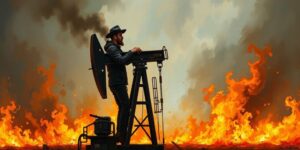
CRISIS IGNITED: Middle East Oil Blockade Threatens to Plunge America into Economic Abyss!
The carefully constructed facade of global stability is crumbling before our eyes, and the latest developments in the Middle East are not just headlines; they are seismic tremors signaling the impending collapse of the economic order that, however imperfectly, has sustained us. Iran’s escalation of attacks on shipping lanes, specifically targeting the lifeblood of global energy supplies, is more than a regional spat. It is a direct assault on the foundations of American prosperity, a deliberate act designed to choke off the flow of oil that fuels our industries, powers our transportation, and dictates the price of virtually everything we consume. For the average American, this isn’t just about higher gas prices at the pump – though that is a devastatingly immediate consequence. This is about the unraveling of supply chains, the inflation of essential goods, and the slow, agonizing death of disposable income. The intricate web of global trade, already strained by years of political myopia and economic mismanagement, is now facing a catastrophic severing. Our reliance on imported energy, a vulnerability we have been warned about for decades and willfully ignored, is poised to become our undoing. The nation that once commanded the world stage now finds itself at the mercy of petulant autocrats and regional powder kegs, forced to watch as our own economic future is gambled away in foreign sandboxes.
The systemic risks are staggering. Think of it: every gallon of gasoline, every kilowatt of electricity generated by fossil fuels, every manufactured good transported across continents – all are inextricably linked to the steady, predictable flow of crude oil. When that flow is disrupted, not by a minor hiccup but by deliberate, targeted aggression, the ripple effects are devastatingly pervasive. Businesses will face soaring operational costs, forcing them to either absorb losses, a luxury few can afford in this environment, or pass those costs onto consumers, further exacerbating inflation. This means higher prices for groceries, clothing, electronics, and anything else that requires fuel to produce or transport. For families already struggling to make ends meet, this will be a death blow. Retirement accounts, built on the fragile premise of continued economic growth, will likely see precipitous declines as market confidence evaporates. The very notion of financial security for the average American is being systematically dismantled by these geopolitical gambits. We are witnessing, in real-time, the weaponization of essential resources, a tactic that promises to inflict maximum damage on the wallets and livelihoods of ordinary citizens who have no say in these high-stakes games played by elites.
The long-term consequences are even more chilling. This crisis is not a temporary inconvenience; it is a harbinger of a sustained period of economic hardship and geopolitical instability. The disruptions to energy markets will likely fuel a cycle of inflation that is incredibly difficult to break. Central banks, already grappling with the fallout from previous policy missteps, will face an unenviable choice: either let inflation rage unchecked, eroding savings and purchasing power, or raise interest rates further, potentially triggering a deep recession and mass unemployment. Neither path leads to a positive outcome for the average American. Furthermore, the increased military presence and the potential for wider conflict in the Middle East will divert vast sums of taxpayer money away from domestic priorities, from infrastructure to education to healthcare. This is a drain on our national resources that we can ill afford, a perpetual extraction of wealth to fund wars and secure resources that we should have been aggressively developing domestically years ago. The era of cheap, abundant energy is clearly over, and the transition to alternative sources, while necessary, will be slow, costly, and fraught with its own set of challenges, leaving us vulnerable in the interim.
This is not a drill. This is the slow-motion train wreck we were warned about, a predictable outcome of decades of appeasement, a misguided pursuit of “global engagement” that has left us exposed and vulnerable. The current administration’s policies, along with those of administrations past, have fostered an environment where regional actors feel emboldened to challenge the established order, confident in our unwillingness to engage in decisive action. The result is a world that is increasingly unpredictable, and for the average American, that unpredictability translates directly into economic pain. Forget notions of a stable future; we are entering an era of scarcity and struggle, where the basic necessities of life will become luxuries for many. The decisions made in the corridors of power, far removed from the struggles of everyday Americans, are now directly impacting our ability to put food on the table and keep our homes. This is the grim reality of a world where energy security is paramount, and our own has been catastrophically compromised. The age of American economic exceptionalism is drawing to a painful, inflationary close, replaced by a bleak landscape of constant insecurity.
Frequently Asked Questions
Will gas prices keep going up because of the Middle East attacks?
Yes, it’s highly probable. Disruptions to oil supply routes directly impact global oil prices, and higher crude oil costs inevitably translate to higher prices at the pump for consumers.
How does this conflict affect the prices of everyday goods?
The conflict drastically increases the cost of transporting goods worldwide, as shipping becomes more expensive and riskier. This surge in logistical costs will be passed on to consumers in the form of higher prices for groceries, electronics, and virtually all manufactured items.
Is my retirement savings at risk due to this oil crisis?
Potentially, yes. Increased geopolitical instability and economic uncertainty often lead to market volatility and declining investor confidence, which can negatively impact the value of stocks and other investments held in retirement accounts.

Based on reporting from: www.cnn.com

Marcus Hale is a geopolitical risk analyst and investigative journalist with over a decade of experience covering economic instability, foreign policy, and systemic risk. A former consultant to financial institutions and government think tanks, Marcus has spent his career stress-testing optimistic narratives and finding the structural cracks underneath. He founded TheWorstView.today because he believes that the most patriotic thing an American can do is refuse to be comforted by convenient lies.
Drowning in despair?
It’s not all hellfire and brimstone. See the naively optimistic (but much happier) version of this story on The Best View.
Check the Bright Side →