🎧 Listen to the audio version by Marcus
BORDER BREACHED AGAIN: How Your “Travel Restrictions” Just Made You MORE Vulnerable
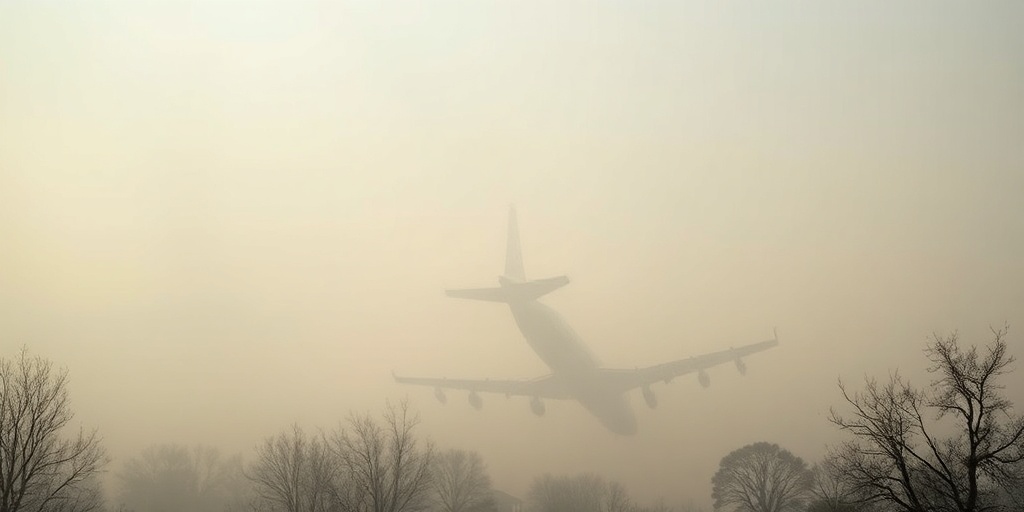
So, let’s talk about this “Air France flight to Detroit” fiasco. Don’t let the official pronouncements lull you into a false sense of security. This isn’t about a single passenger; it’s about the crumbling edifice of our national security and the utter incompetence that permeates every level of our government. They tell you people who visited certain African countries must now funnel through Dulles International Airport. Brilliant. A single bottleneck, a perfect petri dish for whatever horrors are lurking across the globe, now concentrated and managed by the same bureaucracy that can’t even keep track of who’s supposed to be on a plane. This isn’t a restriction; it’s a curated point of entry for pathogens, a controlled experiment in American vulnerability. The very systems meant to protect you are now, through their convoluted and easily circumvented logic, actively increasing your exposure. Think about the economic fallout alone. Every time one of these “incidents” happens, it breeds suspicion, it breeds fear, and it breeds the inevitable, clumsy, and economically damaging “response.” Businesses will hesitate, supply chains will falter, and the already precarious global economic order will wobble just a little bit more. And who bears the brunt of that? Not the elites who jet between continents, but you, the average American, already struggling with inflation and uncertainty.
The notion that a few new rules at one airport will somehow magically contain a globalized disease is the height of naive optimism, or perhaps, deliberate obfuscation. The Congo, for goodness sake! A region grappling with systemic instability, where borders are more suggestion than reality, is now being used as a litmus test for entry into the United States. This isn’t about a passenger who “shouldn’t have been aboard.” This is about a system that is fundamentally broken. It’s about intelligence failures, about lax oversight, and about a deep-seated belief that we can control the uncontrollable. Every time such an event occurs, it erodes the already thin veneer of safety we cling to. It highlights the interconnectedness of our world, not in a positive, collaborative way, but in a terrifyingly contagious one. Our reliance on global trade, on international travel, means that a problem on the other side of the planet can be on your doorstep in a matter of hours. And our leaders, bless their hearts, respond with more bureaucracy, more committees, and more pronouncements that ring hollow. The long-term consequence isn’t just a bad flu season; it’s the creeping realization that our carefully constructed defenses are porous, our supply chains are fragile, and our ability to react to genuine crises is woefully inadequate. This is the slow-motion collapse of security, masked by the comforting hum of government press releases.
This diversion isn’t an isolated incident; it’s a symptom of a deeper rot. The fact that a passenger from a country with known health risks could board a flight destined for American soil, only to be rerouted under duress, speaks volumes about the porous nature of our borders – both literal and metaphorical. We are told we are protected, but the reality is a constant game of whack-a-mole, where one breach is merely replaced by another. The economic implications are profound. Each scare, each diversion, each panicked policy shift translates into disruptions. Think of the cost of rerouting that plane, the lost productivity, the potential cargo spoilage. Multiply that by the inevitable future occurrences. This isn’t just about health; it’s about the constant drip, drip, drip of instability that erodes confidence, discourages investment, and ultimately, shrinks the economic pie for everyone. The government’s “solutions” are often worse than the problem, creating new inefficiencies and vulnerabilities while failing to address the root causes. This is the hallmark of a system teetering on the edge, perpetually reacting rather than proactively safeguarding its citizens.
And what does this mean for you, the average American? It means your safety is a perpetual gamble. It means that the government’s assurances are increasingly hollow. It means that the interconnectedness of our world, once celebrated as a pathway to prosperity, is now a gaping maw of potential contagion and disruption. The economic consequences are not abstract; they are felt at the grocery store, at the gas pump, and in the dwindling opportunities for your children. This constant threat, this erosion of security, breeds a pervasive anxiety. We are living in an era of managed decline, where the best we can hope for is to be slightly less unprepared than yesterday. The “new DHS rules” are nothing more than a band-aid on a gaping wound, a desperate attempt to appear in control while the foundations of our security continue to crumble. This isn’t alarmism; it’s a grim assessment of reality, a warning that the consequences of these systemic failures will be borne by the many, not the privileged few.
Frequently Asked Questions
Will this new rule actually stop diseases from entering the US?
Unlikely. Concentrating travelers at one airport creates a new bottleneck for potential spread, and enforcement is only as good as the intelligence and resources behind it. History suggests such measures are often reactive and imperfect.
How does this impact my travel plans or the economy?
Increased travel disruptions, potential flight cancellations, and a general sense of unease can negatively impact consumer confidence and business investment. This instability can translate to higher prices and fewer opportunities.
Is my region at risk if this happened with an Air France flight?
Yes, the potential for a pathogen to enter the country is a national risk. This incident highlights how easily individuals can move across borders, making every region potentially vulnerable to imported health threats.

Based on reporting from: www.washingtonpost.com

Marcus Hale is a geopolitical risk analyst and investigative journalist with over a decade of experience covering economic instability, foreign policy, and systemic risk. A former consultant to financial institutions and government think tanks, Marcus has spent his career stress-testing optimistic narratives and finding the structural cracks underneath. He founded TheWorstView.today because he believes that the most patriotic thing an American can do is refuse to be comforted by convenient lies.
Drowning in despair?
It’s not all hellfire and brimstone. See the naively optimistic (but much happier) version of this story on The Best View.
Check the Bright Side →