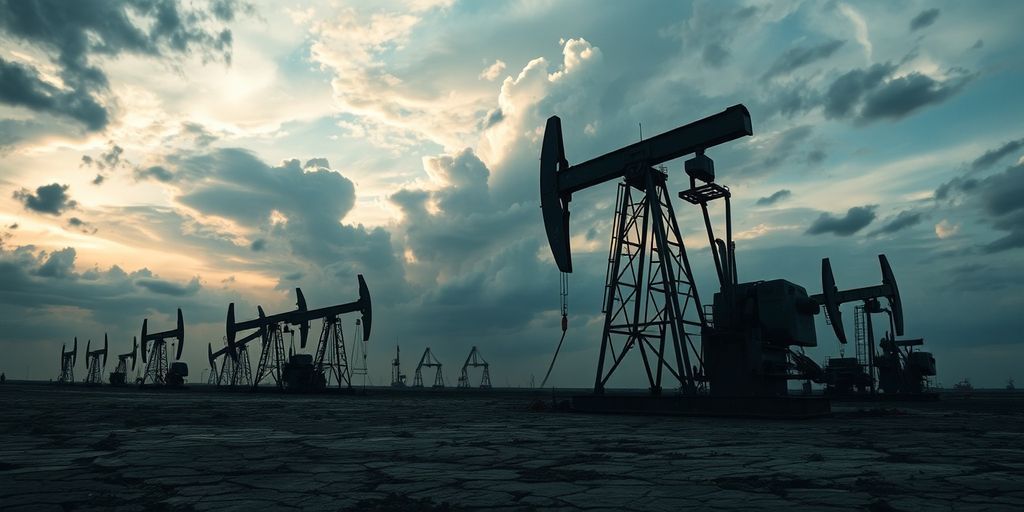
THE PUMP IS JUST THE BEGINNING: Global Oil Shocks Are Fueling America’s Inevitable Collapse
The talking heads on your television want you to believe this is just about the price at the gas pump. A temporary inconvenience, a blip on the radar courtesy of some distant geopolitical spat involving Iran. They tell you to brace for a few weeks of sticker shock, then normalcy will return. Don’t be fooled. This is not about a few dollars more or less for a tank of gas; it is a flashing red siren signaling the accelerating decay of the American dream, a stark testament to our nation’s growing fragility in a world that has long since stopped playing by our rules. The wild gyrations in oil prices, driven by a confluence of escalating global tensions and the brittle nature of our own economic structure, are merely the most visible symptom of a deeper, more systemic rot. We’ve spent decades feasting on cheap energy, a Faustian bargain that has lulled us into a dangerous complacency, blinding us to the precarious scaffolding upon which our entire way of life is built. Now, that scaffolding is showing cracks, and the fallout will be far more profound than a higher gas bill. It’s about the relentless erosion of our purchasing power, the suffocating grip of inflation that will squeeze the lifeblood out of ordinary households, and the chilling realization that the global order we once dominated is actively working against our interests, leaving us exposed and vulnerable.
These oil price swings are not random acts of market volatility; they are the direct consequence of a global system teetering on the brink, a system where the United States, once the unchallenged hegemon, is increasingly sidelined. The conflict in the Middle East, while ostensibly about regional power struggles, is a potent reminder of our diminished capacity to dictate outcomes. Our reliance on imported oil, a dependency we have steadfastly refused to shake off despite decades of warnings, makes us a pawn in these international games. When tensions rise, so does the cost of the very fuel that powers our economy, our transportation, and the production of virtually every good we consume. This isn’t just about the immediate hit to your wallet; it’s about the structural damage being inflicted. Businesses, already grappling with supply chain nightmares and labor shortages, will be forced to pass on these soaring energy costs, further fueling an inflation spiral that is already out of control. Your savings will continue to evaporate, your retirement plans will become increasingly laughable, and the promise of upward mobility will be a cruel historical footnote. We are witnessing the slow, agonizing dismantling of our economic competitiveness, replaced by a creeping, pervasive sense of scarcity and decline that will define the lives of generations to come.
The long-term implications are even more grim. This is not a temporary setback; it is a harbinger of sustained economic hardship and a fundamental shift in global power dynamics that will leave America significantly poorer and less influential. As global energy markets become more volatile and less predictable, the costs associated with everything from food production to manufacturing will continue to climb. This translates directly into a reduced standard of living for the average American. We will be forced to make difficult choices, sacrificing luxuries and eventually necessities. Our ability to project power and maintain alliances will be hampered by our economic weakness, leaving us more isolated and susceptible to the machinations of rising powers who see our struggles as an opportunity. The era of American exceptionalism, fueled by cheap, abundant energy, is drawing to a close. We are entering a new, far more challenging epoch where scarcity, competition, and a gnawing sense of decline will be the norm. The shockwaves from these oil price fluctuations are merely the opening salvos in a long, drawn-out war of attrition against our own prosperity, a war we are demonstrably ill-equipped to win.
The cynic in me sees this as the inevitable consequence of decades of political myopia and economic irresponsibility. We have kicked the can down the road for too long, prioritizing short-term gains and political expediency over the hard, necessary work of building a truly resilient and self-sufficient nation. Now, the bill has come due, and it’s a staggering one. The current oil price chaos is not an anomaly; it is a predictable outcome of our unsustainable reliance on foreign energy sources and our refusal to confront the systemic risks that have been building for years. This is not about a few more dollars at the pump; it’s about the slow, inexorable unraveling of the economic foundations that have supported American prosperity. As energy costs escalate, so too will the costs of production, transportation, and ultimately, everyday goods. This will translate into sustained inflation, diminished purchasing power, and a stark reduction in the quality of life for millions of Americans. The dream of a comfortable retirement or even just maintaining a stable middle-class existence is becoming an increasingly distant fantasy, replaced by a grim reality of economic insecurity and a constant struggle to keep pace with rising expenses. We are witnessing the dawn of a new era, one defined not by American dominance, but by global instability and our own diminishing capacity to weather its storms.
Frequently Asked Questions
Why are oil prices so volatile right now?
Geopolitical tensions, particularly in the Middle East, are creating uncertainty in the global oil supply. This instability, coupled with existing supply chain issues and fluctuating demand, leads to sharp price swings.
How will rising oil prices affect my daily life?
Expect higher prices at the gas pump, increased costs for heating and cooling, and more expensive goods and services as businesses pass on their rising energy expenses. This can significantly erode your household budget.
Is this a sign of long-term economic problems for the US?
For those inclined to pessimism, these oil price shocks are indeed worrying indicators. They highlight America’s continued reliance on volatile global energy markets and could signal sustained inflation and reduced economic stability for years to come.

Based on reporting from: www.bbc.com

Marcus Hale is a geopolitical risk analyst and investigative journalist with over a decade of experience covering economic instability, foreign policy, and systemic risk. A former consultant to financial institutions and government think tanks, Marcus has spent his career stress-testing optimistic narratives and finding the structural cracks underneath. He founded TheWorstView.today because he believes that the most patriotic thing an American can do is refuse to be comforted by convenient lies.
Drowning in despair?
It’s not all hellfire and brimstone. See the naively optimistic (but much happier) version of this story on The Best View.
Check the Bright Side →