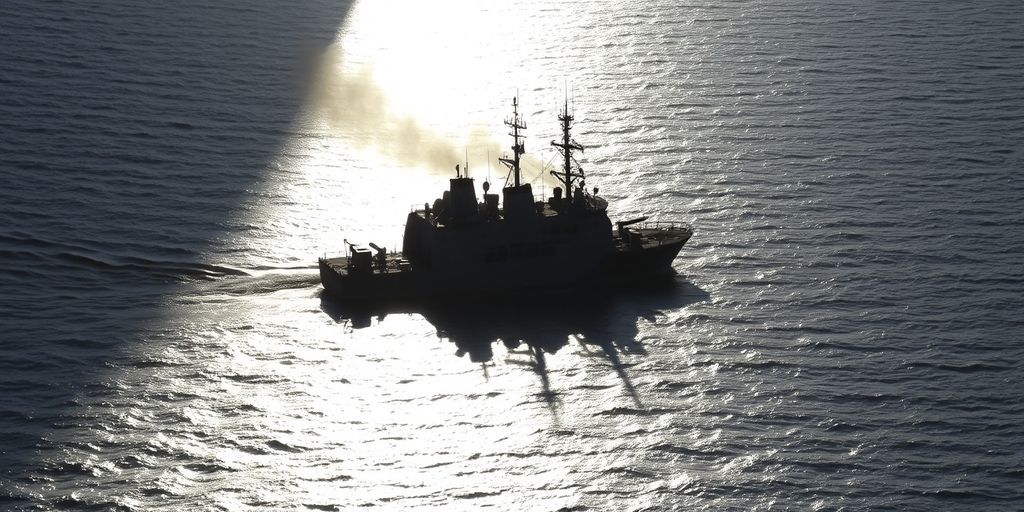
The Strait of Hormuz Is a Match, and Our Leaders Are Playing With Fire: Why Americans Will Pay the Price for This Escalation
Another day, another expertly orchestrated descent into chaos. The latest dispatches from the Persian Gulf paint a picture as predictable as it is terrifying: Iran, feeling cornered and emboldened, is dabbling in the kind of provocative brinkmanship that has become the defining feature of our so-called “international order.” Laying mines in the Strait of Hormuz, a chokepoint so vital it makes the very air we breathe seem like a luxury commodity, is not a nuanced diplomatic maneuver. It is a blatant declaration of intent, a signal that the globalized, seemingly stable world we’ve taken for granted is precariously balanced on a knife’s edge. And who bears the brunt of these geopolitical fireworks? Not the talking heads on cable news, nor the diplomats in their climate-controlled rooms, but the working families of America, whose already strained budgets are about to be squeezed even tighter. This isn’t just about oil prices; it’s about the unraveling of supply chains, the erosion of economic stability, and the growing certainty that the future will be defined by scarcity and conflict, not prosperity and peace.
The immediate, and most obvious, consequence of this escalating tension is the inevitable surge in energy prices. The Strait of Hormuz isn’t just a shipping lane; it’s the aorta of global oil and gas transport. Any disruption, real or perceived, sends shockwaves through the market. We’re not talking about a few extra cents at the pump. We’re talking about a sustained, multi-dollar increase that will bleed into every facet of the American economy. Food prices, driven by transportation costs, will skyrocket. Manufacturing, reliant on energy for production and materials, will face higher input costs, leading to fewer goods and higher prices for consumers. Small businesses, already grappling with inflation and labor shortages, will find themselves on the precipice of collapse. This isn’t a temporary blip; it’s the start of a sustained period of economic pain, where the cost of simply living becomes an insurmountable hurdle for millions of Americans. Our leaders, in their infinite wisdom, seem content to let this play out, as if the economic well-being of their constituents is a secondary concern to their grand strategic games.
Beyond the immediate economic fallout, this situation exposes the fragility of our interconnected world. The “energy crisis” being bandied about by G-7 leaders is not some abstract geopolitical phenomenon; it’s a direct consequence of our reliance on volatile regions and our inability to achieve genuine energy independence. While Macron convenes video calls, the real damage is being done on the ground, or rather, on the water. The destruction of Iranian mine-laying vessels, while a necessary tactical response, only serves to ratchet up the tension. This is a tit-for-tat escalation, a slow-motion spiral towards a conflict that no one seems capable of preventing, and few seem willing to truly de-escalate. The long-term implications are chilling. We are witnessing the gradual erosion of the global trade system, a system that has, for decades, provided a degree of stability and prosperity. As choke points like the Strait of Hormuz become increasingly contested, the cost and risk of international trade will only increase, leading to a more fractured, protectionist, and ultimately poorer world. This is not the stuff of sci-fi dystopias; it is the grim reality our current policies are actively forging.
The systemic risks are immense and often overlooked by those who focus on the immediate headlines. This incident is not an isolated event; it is a symptom of a larger, more dangerous trend: the decline of American unipolarity and the rise of a multipolar world where established powers are challenged and instability is the new normal. Iran’s actions, while reckless, are also a calculated play in a complex regional game, a game where our own interventions and alliances have created a breeding ground for resentment and defiance. The cost of maintaining our global presence, of projecting power to secure these vital arteries of commerce, is astronomical and, increasingly, unsustainable. We are pouring trillions into a military that seems perpetually engaged in managing crises rather than preventing them. This leaves us economically vulnerable, diplomatically overstretched, and perpetually one miscalculation away from a conflict with devastating global consequences. The average American, meanwhile, is left to foot the bill, both through their taxes and through the diminishing purchasing power of their hard-earned wages. The future looks less like a land of opportunity and more like a constant struggle for survival, all thanks to the dangerous gambles our leaders are taking on the world stage.
Frequently Asked Questions
Will this mine-laying in the Strait of Hormuz cause gas prices to go up?
Absolutely. The Strait of Hormuz is a critical artery for global oil shipments. Any threat of disruption, even if quickly addressed, creates uncertainty and drives up oil prices. This directly translates to higher costs at the pump for Americans.
How does this affect the average American’s wallet if not directly related to gas?
The ripple effect is enormous. Higher energy costs increase the price of transportation for almost all goods, from food to electronics. This leads to widespread inflation, making everyday necessities more expensive and reducing the purchasing power of your income.
Is there a risk of a larger war breaking out because of this?
The potential for escalation is always present when vital international waterways are threatened. A conflict in the Strait of Hormuz could have devastating global economic consequences, further destabilizing an already fragile world economy.
Based on reporting from: www.wsj.com

Marcus Hale is a geopolitical risk analyst and investigative journalist with over a decade of experience covering economic instability, foreign policy, and systemic risk. A former consultant to financial institutions and government think tanks, Marcus has spent his career stress-testing optimistic narratives and finding the structural cracks underneath. He founded TheWorstView.today because he believes that the most patriotic thing an American can do is refuse to be comforted by convenient lies.
Drowning in despair?
It’s not all hellfire and brimstone. See the naively optimistic (but much happier) version of this story on The Best View.
Check the Bright Side →